Mindful Eating: Buddhist Wisdom on Gratitude and Contentment
Most of us eat several times a day, but how often are we truly present for a meal? A mindfulness teaching shared in Bhutan invites us to slow down, appreciate our food and discover how eating can become a simple practice of gratitude and happiness.
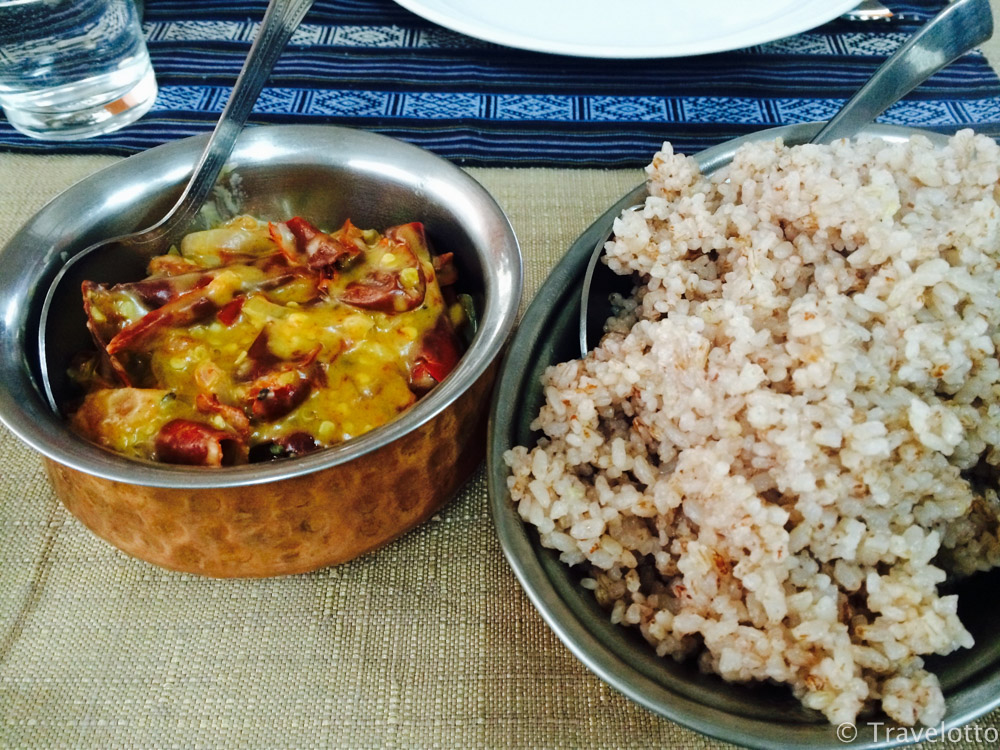
Food is part of everyday life in Bhutan, from family meals shared at home to traditional dishes prepared for gatherings and celebrations. But a meal can also invite us to reflect on something deeper: the many conditions that make it possible for food to reach our table.
In this approximately 14-minute teaching shared in Bhutan, a Buddhist nun speaking from the Plum Village mindfulness tradition explores how mindful eating can help us experience gratitude, contentment and connection. The teaching draws on a tradition associated with Thich Nhat Hanh and should not be confused with a specifically Bhutanese Buddhist practice.
Watch the mindful eating teaching
1. Before eating, recognise what made your food possible
The teaching encourages us to look at our food before beginning to eat. A bowl of rice or a plate of vegetables did not appear on its own. It depends on sunshine, rainfall, water, soil, changing seasons and the work of many people.
There are farmers who grow the ingredients, people who transport and sell them and those who prepare the meal. Even an ordinary plate of food contains the contribution of the natural world and countless human hands.
By recognising these connections, we make room for gratitude. The practice does not require a special ceremony. It can begin with a moment of quiet appreciation before the first bite.
2. Slow down enough to enjoy each bite
In the teaching, the nun encourages listeners to chew slowly and notice different flavours. She speaks about giving ourselves enough time to eat rather than rushing through meals or combining eating with several other tasks.
She recalls seeing people walking quickly through Paris while eating baguettes. The memory becomes a gentle reminder that we can sit down and allow eating to nourish our attention as well as our bodies.
A simple idea: Instead of treating a meal as another task to finish, give it your attention. Notice the appearance, texture and taste of the food, and pause between bites.
3. Contentment begins with recognising enough
One of the most personal moments in the teaching concerns the desire for a second piece of cake or another biscuit before finishing the first. The nun describes how mindful eating helped her enjoy what was already in front of her rather than immediately thinking about more.
Her point is not that people should go hungry or follow a strict diet. It is about recognising the experience of contentment and becoming more aware of habit, appetite and desire.
She connects this sense of having enough with resisting consumerism and with Bhutan's idea of Gross National Happiness. It is an interesting connection: happiness need not depend only on acquiring more. It can also grow from appreciating what is already present.
4. A meal reminds us that we are interconnected
The teaching introduces the Plum Village concept of interbeing, a way of describing the idea that our lives are not separate from the people, places and natural systems around us.
A meal illustrates this simply. We rely on the earth, the weather, farmers, cooks and one another. Similarly, our everyday choices can affect other people and the wider world.
Mindful eating therefore becomes more than paying attention to food. It becomes an invitation to respond to others with greater care, generosity and appreciation.
5. Eating together is also a practice of connection
The nun speaks warmly about sharing meals as a community, sitting together, making eye contact and smiling. She also draws attention to drinking a cup of tea slowly and recognising the simple pleasure of warmth and nourishment.
These are small acts, but they can change how a meal feels. Instead of being distracted or hurried, we become present with the people around us.
How to practise mindful eating at your next meal
- Pause before you begin. Take a gentle breath and look at your meal.
- Remember its origins. Think of the natural conditions and people who helped bring the food to your table.
- Eat without rushing. Notice the texture and flavours as you chew.
- Check in with yourself. Pay attention to hunger, satisfaction and the impulse to reach automatically for more.
- Enjoy the people around you. When sharing a meal, make space for conversation, smiles and togetherness.
What this teaching can offer visitors to Bhutan
For travellers, discovering Bhutan is not only about visiting monasteries, seeing mountain landscapes or tasting unfamiliar dishes. It can also mean paying closer attention to the everyday experiences that make a journey memorable.
Whether you are enjoying red rice, sampling a local vegetable dish or sharing a warm cup of tea, a meal can become an opportunity to slow down and appreciate the moment. The teaching offers one way to approach that experience thoughtfully, without suggesting that every Bhutanese meal follows a formal mindfulness ritual.
To explore Bhutanese food traditions further, read our story about Hoentay, the Taste of Lomba. For another perspective on generosity and spiritual life in Bhutan, see Yoeja: The Unbroken Prayer.
A reflection to take away: At your next meal, try asking yourself: What had to happen for this food to reach me, and can I give it a few moments of genuine attention?
Read the full edited transcript of the teaching
Living and Eating Mindfully
We eat about three times a day to sustain our lives and support our health. But there is a way of truly eating and truly living, so that we can touch the peace and happiness within us and around us.
This is how our community practises, following the teachings of our teacher. The way we live together is guided by mindfulness throughout the day, and we would like to share that practice with you.
We learned that Bhutanese people take a break at 10:30, which is good. It helps the body regain energy and freshness. Our body and mind are one. When we can feel that oneness, we can renew our energy, mindfulness, peace and happiness.
I heard some friends mention momo. Momo is one of our favourite foods as well. Eating is a very deep practice. We are what we eat. When we practise awareness and mindfulness, it helps us know what we put into our bodies.
Recognising the Many Conditions Behind Our Food
Before we eat, we can look at the food and appreciate it. We can become aware of what we are about to bring into our bodies.
We have so many resources, especially here in Bhutan. Perhaps not all are material resources, but there is richness in the plants, fresh air, water, seasons and all the conditions that bring our food together.
The sunshine and rain help grow our rice, vegetables and other food. Without sunshine and rain, that would not be possible. We can also think of the people who make our food available at the market and the loving hands of friends who prepare it. Their time, kindness and energy come together in our meal.
When we practise awareness in this way, it is already a practice of mindfulness. We begin to feel grateful. Gratitude supports our happiness, and we can smile and thank the whole universe and everyone who has brought this food to us today.
Chewing, Enjoying and Feeling Content
When we put food into our mouths, we can enjoy chewing. We can be happy that we are still able to chew. Chewing exercises the muscles in our faces and helps our digestion. When we chew well, the stomach does not have to work so hard.
We can enjoy every bite and notice the different tastes: salty, sweet and all the other flavours. We can try chewing until we come to the end of the taste, when the food has almost become liquid.
When I started practising this way, I felt very content and happy. Contentment is the feeling that we have enough, that we are enough and that we do not have to look for the second piece.
This is one way to resist consumerism and keep Gross National Happiness strong. It is also something we can share with our families and children, helping them understand when they have enough and that they themselves are enough.
When I first practised, I was not there yet. Before, if I ate a delicious cake or cookie, I would already be thinking about the second piece before finishing the first. Through mindful eating, I came to recognise contentment. For me, it became the best diet programme: you can decide for yourself when you have had enough and stop.
We can enjoy chewing and experience contentment, gratitude and happiness. Sometimes we encourage people to count at least 30 chews. Time belongs to us. We do not always have to rush somewhere.
Making Time to Nourish Body and Mind
When I was training in France, before moving to Thailand, I sometimes visited Paris. I remember seeing people eating baguettes while walking quickly along the footpath. The baguettes looked delicious, but I was surprised to see people eating and walking so fast, multitasking.
Sometimes we need to reclaim our humanness. We can sit down, eat properly and really enjoy nourishing our bodies and minds at the same time.
It is also special to live with a sense of community and family. We can come together, sit in a circle, enjoy our togetherness, look at one another and smile. We can take at least ten minutes to eat and enjoy a wonderful cup of tea.
When we eat, we can chew until the food becomes liquid. And when we drink, we can take time to appreciate the water or tea before swallowing. This allows us to feel what we are bringing into our bodies. It is a wonderful practice of mindfulness of the body.
Interbeing and Our Connection with Everything
When we practise in this way, we can also see that we are not here on our own. Food is made of many conditions, and we too are here because of the whole cosmos. We are connected to everything around us.
In Plum Village, we use the word “interbeing” to describe this interconnectedness. It is a word our teacher hoped would one day be in the dictionary.
Society, advertising and consumerism often tell us that we need this or that and must own more things. Yet the simple practice of eating can help us see that we do not have a separate self, disconnected from other people or places. We are always connected with everything.
Understanding this can help us feel more grateful, kind and loving. What we eat and what we do affect others. That is why we need to care for one another, support one another, help one another and stay connected.
Closing Practice: Offering Our Presence
After this, the sisters will invite us to stand and express our gratitude. Thank you for being here and for sharing this time together.
In our practice, even simple gestures can carry healing. We can bring our palms together and breathe. The joining of our palms is like bringing our body and mind together, so that we are truly present and can offer our love and presence.
We will rearrange the chairs into a circle. As we bring our body and mind together, we can breathe in and offer a lotus, and breathe out with awareness of the Buddha in each person. Everyone has the capacity for awakening. Then we can help one another arrange the chairs in a circle.