Fly Fishing in Bhutan: Haa Valley, Himalayan Rivers and Tailor-Made Fishing Tours
Come for the fishing. Stay for the experience. Discover the quiet pleasure of casting beside a Himalayan river, surrounded by forests, mountain scenery and the rhythms of rural Bhutan.
Our fly-fishing experiences combine time on the water with Bhutanese hospitality, cultural discovery and a slower way of travelling. Whether you are trying fly fishing for the first time or hoping to refine your technique, we can help you explore an experience suited to your interests and the permitted fishing season.
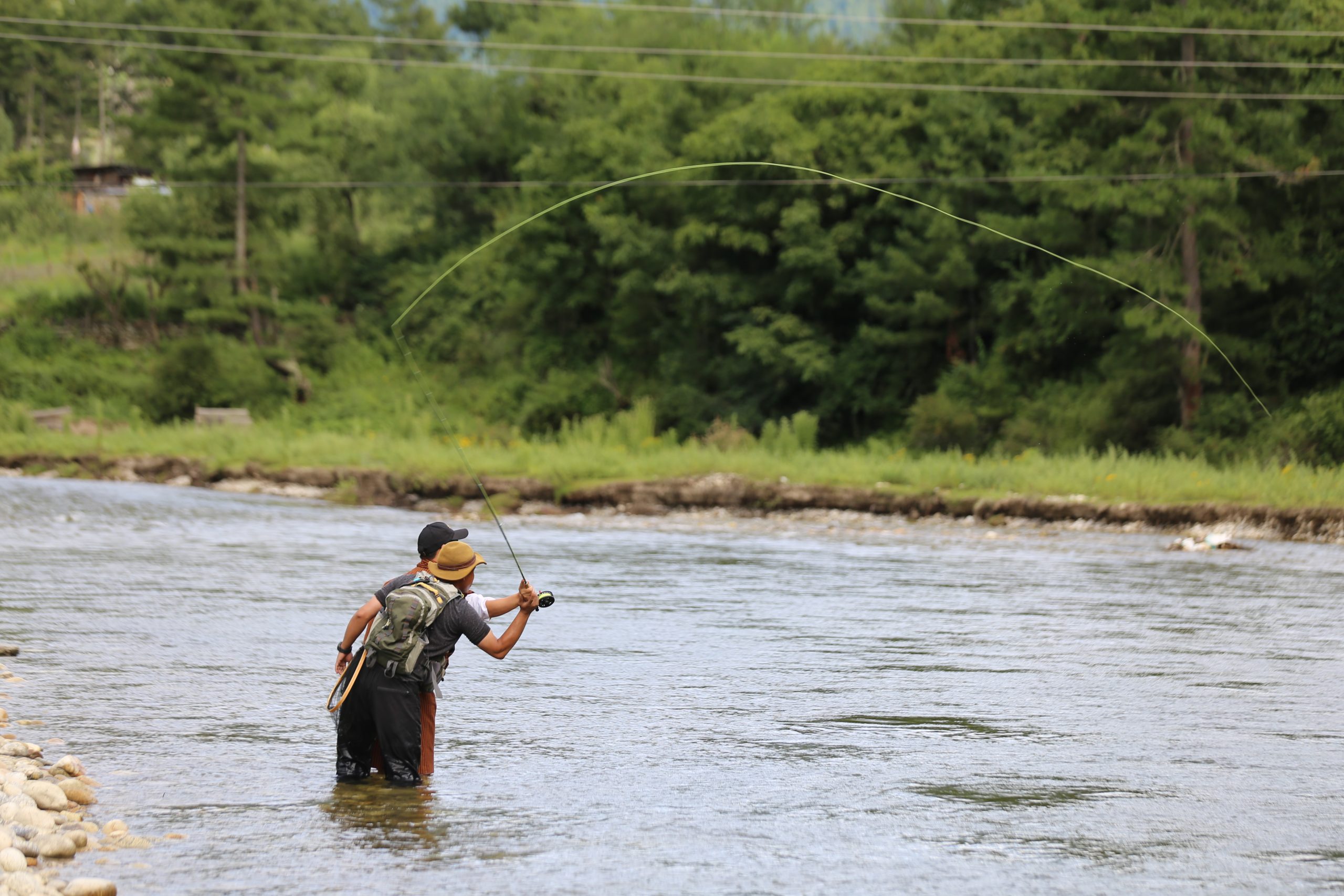
More Than Fishing: A Different Way to Experience Bhutan
There is something special about spending a morning beside a mountain river. The sound of moving water replaces the noise of everyday life. You watch the current, adjust your cast and wait patiently for the next movement on the surface. Between casts, there is time to notice the forest, the changing light and the landscape around you.
Fly fishing offers a quieter perspective on Bhutan. It can be a rewarding outdoor pursuit in its own right, but it can also be a chance to slow down and reconnect with nature. Some people describe this kind of time outdoors as nature-based wellbeing or eco-therapy. We see it more simply: a chance to be fully present in a beautiful place.
Bhutan is also a deeply Buddhist country, where respect for living beings and the natural world shapes many aspects of daily life. Responsible catch-and-release fishing, conducted only where authorised, is essential to making this experience compatible with local conservation priorities and regulations.
Fly Fishing in Haa Valley, Bhutan
Haa is one of western Bhutan's most peaceful valleys. Its forests, traditional villages, mountain streams and relatively unhurried atmosphere make it an appealing destination for travellers looking beyond the country's best-known attractions. Haa opened to international tourism in 2002 and still feels distinctly different from busier visitor routes.
Our Haa fly-fishing experience focuses on enjoying the river environment as much as the activity itself. Depending on the authorised site, conditions and the experience arranged, anglers may encounter trout and other cold-water fish. Lhayul's Haa experience describes snow trout, brown trout and rainbow trout, although sightings and catches cannot be guaranteed and species availability varies by location.
Haa can be incorporated into a wider Bhutan holiday alongside Paro, Thimphu and other destinations. The journey can include cultural visits, scenic drives, village experiences and relaxed time in nature, so companions who do not fish can still enjoy the trip.
Our Haa Fly-Fishing Experiences
We offer two styles of Haa fly-fishing experience, allowing guests to choose between an accessible introduction and a more immersive day on the river. Arrangements are subject to season, permit approval and guide availability.
Standard Fly-Fishing Experience
A welcoming introduction for guests who are curious about fly fishing or would like a relaxed outdoor activity during their Bhutan holiday.
- Introduction to basic casting techniques
- Guidance on safe and responsible fishing practices
- Time to enjoy the river and its surroundings
- Suitable for beginners, subject to individual needs
Premium Fly-Fishing Experience
A more immersive experience for guests who would like additional time to learn, practise and appreciate the details of fishing in a Himalayan river.
- Greater focus on refining casting techniques
- Introduction to reading the water and understanding the river
- A more unhurried, nature-focused experience
- Time for questions and individual guidance
Depending on the itinerary and local conditions, a riverside picnic can be arranged. A bonfire may also be possible where local rules, weather and fire-safety conditions permit.
Package inclusions, duration, equipment, guide services, meals and prices are confirmed individually when you enquire.
Where Can You Go Fly Fishing in Bhutan?
Bhutan has diverse rivers, but not every attractive stretch of water is open for recreational fishing. The following places are useful for understanding the country's angling landscapes, not a promise of access to any specific site.
Haa Valley
Our featured experience, with quiet rural scenery and a strong emphasis on learning, relaxation and spending time beside a mountain river.
Paro Valley
Paro is a convenient starting point for many Bhutan journeys. Angling opportunities depend on designated sites and approvals, while cultural visits offer excellent additions to a trip.
Bumthang and central Bhutan
Forested valleys, cold-water rivers and important Buddhist heritage make central Bhutan an interesting region for nature-focused travel. Any fishing component requires separate verification.
Lower-altitude mahseer rivers
Bhutan's golden mahseer habitats offer a different, specialised recreational fishing experience. These waters have distinct conservation requirements, access rules and seasonal restrictions.
If you are interested in a multi-day fishing-focused holiday rather than a single Haa experience, contact us with your preferred dates and angling interests so we can assess what is realistically available.
Best Time for Fly Fishing in Bhutan
For Lhayul's Haa experience, the preferred travel windows are generally January to May and September to October. Actual fishing days depend on the type of water, conditions and restrictions under Bhutanese law. A suitable travel month does not mean that fishing is allowed on every day of that month.
Spring: March to May
Fresh mountain scenery and generally pleasant daytime conditions make spring appealing for a combined nature and cultural journey. Water levels and access must be checked locally.
Autumn: September to October
Autumn often brings clearer skies and attractive mountain scenery. It is also a popular time to combine an outdoor experience with Bhutanese festivals and cultural visits.
Winter: January to February
Haa can be cold, particularly early in the morning. Fishing may be possible on authorised days, but comfort, river conditions and religious-calendar restrictions matter.
Summer: June to August
Monsoon rainfall can affect river conditions and access. Mahseer waters are subject to a June–August spawning-season closure, and other site-specific restrictions may apply.
Fishing Permits, Guides and Catch-and-Release Rules
Bhutan regulates recreational fishing to protect aquatic ecosystems and maintain cultural and conservation safeguards. International guests should plan for the following:
- Fishing permit: A valid permit or authorisation is required for the designated fishing area. Permit fees and procedures depend on the site and current rules.
- Bhutanese fishing guide: Non-Bhutanese anglers must be accompanied by a Bhutanese fishing guide.
- Catch and immediate release: Recreational fishing is restricted to catch-and-release practices.
- Appropriate tackle: Regulations specify artificial flies or lures with a single barbless hook for recreational fishing.
- Restricted places and dates: Protected areas, religious sites, certain water bodies, spawning periods and designated religious days can carry prohibitions.
We encourage anglers to handle fish as little as possible, keep them in the water wherever practicable and follow their guide's instructions. Never assume that a river is open simply because it appears accessible.
Regulatory details are based on Bhutan's Forest and Nature Conservation Rules and Regulations, including amendments published in 2025. Requirements may change and must be reconfirmed before booking.
Suggested 6-Day Bhutan Fly-Fishing and Cultural Tour
This is an illustrative itinerary rather than a fixed departure. The fishing day is included only if the necessary authorisations, weather and seasonal conditions allow it.
- Day 1: Arrive in Paro. Settle into Bhutan, enjoy the valley scenery and visit local cultural attractions depending on your arrival time.
- Day 2: Explore Paro. Discover Bhutanese architecture, villages and heritage sites, or take a scenic walk as you acclimatise.
- Day 3: Travel to Haa Valley. Cross the scenic mountain landscape and spend the afternoon exploring Haa's quieter surroundings.
- Day 4: Guided fly fishing in Haa. Enjoy your selected Standard or Premium experience at an authorised site, with the possibility of a riverside picnic.
- Day 5: Return towards Paro. Take time for sightseeing, local food and a relaxed afternoon. Alternative nature activities can be arranged if fishing is unavailable.
- Day 6: Departure. Transfer for your onward journey.
For a longer stay, we can explore combining fishing with Bhutan cultural tours, monastery visits, photography, hiking or time in Punakha and Thimphu.
What to Bring on a Bhutan Fly-Fishing Trip
Clothing and personal items
- Layers for changing mountain temperatures
- Waterproof jacket and quick-drying clothing
- Non-slip footwear suitable for riverbanks
- Hat, sunglasses and sunscreen
- Reusable water bottle and personal medication
Fishing equipment
- Fly rod and reel appropriate for the planned site
- Barbless artificial flies and suitable line
- Polarised sunglasses
- Waders if appropriate and approved for conditions
- Small waterproof bag for essentials
Please check equipment availability with us before travelling. Do not assume specialist tackle or waders will be provided. We can advise what to bring once your specific experience is confirmed.
Why Combine Fly Fishing with a Bhutan Holiday?
A Bhutan fishing holiday does not have to be about spending every day on the river. Many guests prefer a balance: a morning learning to cast, an afternoon visiting a village, a walk through a pine forest or time discovering Bhutan's Buddhist heritage.
This also makes a fly-fishing experience appealing to couples, families and small groups with different interests. One traveller may be eager to practise casting, while another may prefer photography, gentle walking or exploring local traditions. A tailor-made itinerary gives everyone room to enjoy the journey.
As a Bhutanese family-run travel company established in 1999, Lhayul plans private journeys around guests' interests, comfort and pace. We can help bring together the fishing experience and the wider travel arrangements, including accommodation, transport and cultural visits. Learn more about Lhayul.
Why Fly Fishing in Haa Is a Unique Bhutan Experience
Most visitors discover Bhutan through its monasteries, mountain passes and historic dzongs. Fly fishing adds something quite different: time spent in one place, observing a river closely instead of rushing between landmarks. It is an opportunity to see the landscape at a slower pace, accompanied by people who understand the valley and its changing conditions.
Small groups, more personal attention
With a maximum of four participants for our Haa experience, there is space to ask questions, practise at your own pace and enjoy a quieter day outdoors.
Learning as part of the journey
For a beginner, the memorable moment may be learning a first cast. For a returning angler, it may be noticing how the current moves around stones and trying a different approach.
A valley beyond the usual itinerary
Haa's rural setting makes the experience more than a fishing stop. The journey itself offers an opportunity to appreciate western Bhutan's forests, villages and mountain scenery.
Space for non-anglers too
Travelling with someone who does not fish? We can discuss a balanced itinerary with cultural visits, photography and nature experiences so the trip works for everyone.
What Does a Guided Fly-Fishing Day in Haa Look Like?
Each day is shaped by the weather, the authorised fishing location, the guide's assessment and your level of experience. Rather than promising a rigid timetable, here is an example of how the experience could unfold.
- Morning: Meet your guide and prepare. Discuss river conditions, safety, conservation rules and the equipment appropriate for the day.
- Introduction or refresher. Beginners can focus on basic casting and how to approach the water. Experienced anglers can discuss technique and local conditions with the guide.
- Time on the water. Fish at an approved location, take breaks and enjoy the river landscape. The emphasis is on the experience, not the number of fish caught.
- Riverside pause. Depending on arrangements, enjoy a picnic and take time for photography or simply watching the water.
- Return and unwind. Continue exploring Haa or return to your accommodation for a relaxed evening.
This is an illustrative outline, not a guaranteed programme. Exact timing, facilities and inclusions will be confirmed for your booking.
Trout, Snow Trout and Bhutan's Mountain Rivers
Part of the appeal of fishing in Bhutan is learning about its cold-water river environments. Lhayul's original Haa description mentions snow trout, brown trout and rainbow trout. These are useful names for visitors researching the experience, but fish distribution is not uniform across Bhutan and a species mentioned in a tour description should not be interpreted as a guaranteed catch at any particular site.
Snow trout is a common name used for several Himalayan cyprinid fishes and should not be confused with true trout such as brown trout or rainbow trout. That distinction matters when discussing local ecology and responsible fishing. A knowledgeable local guide can explain what is known about the approved stretch of river and which methods are permitted.
Cold-water rivers are sensitive environments. Keeping fish in the water where possible, using the legally required tackle and avoiding unnecessary handling all help reduce stress on released fish. We encourage guests to enjoy observing the river's wider ecosystem, not just the moment of a catch.
Combine Haa Fly Fishing with Culture, Villages and Scenic Drives
One of the advantages of a private Bhutan itinerary is that your fishing day can be part of a wider journey. You need not choose between outdoor adventure and the country's cultural heritage.
Explore Haa's traditional villages
Allow time to appreciate rural architecture, everyday life and the valley's quieter character. Visits should always be respectful of residents' privacy.
Enjoy the Chele La mountain route
Depending on road and weather conditions, the scenic route between Paro and Haa via Chele La can add mountain views and opportunities to stop for photographs.
Discover Paro's heritage
Combine Haa with Paro's historic sites and, if suitable for your fitness and schedule, a visit to the famous Tiger's Nest Monastery.
Add a mindful nature day
Some travellers prefer to spend an extra day walking, photographing landscapes or simply relaxing rather than filling every hour with activities.
For ideas beyond the river, explore our Bhutan photography tours and spiritual travel experiences.
How to Plan a Fly-Fishing Holiday in Bhutan
To build a realistic itinerary, it helps to separate the overall Bhutan holiday from the fishing arrangements. Travel dates, accommodation and sightseeing may be flexible, while fishing depends on approved sites, permits, guides and conservation closures.
- Tell us your experience level. A first-time visitor may prefer an introductory session, while an experienced angler may want to discuss specific techniques and equipment.
- Share your preferred travel dates. We will need to check whether fishing is lawful and feasible on those exact dates, including religious-calendar restrictions.
- Tell us who is travelling. We can help plan activities for companions who would rather explore the valley than fish.
- Confirm equipment and accessibility needs. Riverbanks may be uneven and water conditions change. Please mention mobility considerations and any equipment you intend to bring.
- Allow room for changes. Weather, water levels, safety considerations and permit conditions may require an alternative activity.
Fly Fishing, Patience and the Art of Slowing Down
There is a reason fly fishing appeals to travellers who are not necessarily looking for an adrenaline-filled adventure. You have to pay attention: to the water, to the light, to your movements and to the changing conditions around you. Some days bring a catch. Others bring only the pleasure of being outdoors.
In Haa, that sense of attention can become the most memorable part of the trip. A simple picnic beside the river, a conversation with a local guide or the view of mountains above the valley may stay with you longer than any photograph.
That is the spirit behind our invitation: come for the fishing, stay for the experience. We want the journey to feel personal and worthwhile, whether you are discovering fly fishing for the first time or returning to a favourite outdoor pursuit.
Fly Fishing in Bhutan: Frequently Asked Questions
Can tourists go fly fishing in Bhutan?
Yes, international visitors can take part in recreational fishing at approved locations with the required permit and a Bhutanese fishing guide. Fishing is not permitted everywhere or on every date.
Where is Lhayul's featured fly-fishing experience?
Our featured experience is in Haa Valley in western Bhutan. We can discuss other possible regions for a tailor-made journey, subject to access and regulations.
Is fly fishing in Bhutan suitable for beginners?
Yes. Our Standard experience is designed as an introduction to the basics, including casting techniques and responsible fishing. Please let us know your experience level and any mobility needs.
What is the difference between the Standard and Premium packages?
The Standard package focuses on introductory skills and the enjoyment of the activity. The Premium package offers a more immersive experience, with additional attention to casting, reading the river and spending unhurried time outdoors.
Do I need a fishing permit in Bhutan?
Yes. Recreational fishing requires authorisation for the designated site. Requirements and fees should be confirmed when planning the trip.
Can I keep the fish I catch?
No. Recreational fishing is subject to catch-and-immediate-release rules. Your guide will explain the correct handling practices.
When is trout fishing closed in Bhutan?
Under the published rules, fishing is prohibited in trout waters during November and December. Additional restrictions apply on specified lunar-calendar dates and religious observances.
Can non-fishing companions join the trip?
Yes. We can plan a wider itinerary with cultural visits, nature walks, photography and other experiences, depending on the group's interests.
Does Lhayul provide fishing equipment?
Equipment availability and inclusions depend on the specific arrangement. Please check with us before booking and before deciding what gear to bring.
How much does a Bhutan fly-fishing tour cost?
Pricing depends on the number of guests, itinerary length, accommodation, transport, fishing guide, permit requirements and any equipment or additional activities. Contact us for a personalised quotation. For general travel expenses, see our Bhutan trip cost guide.
Is Haa Valley worth visiting if I do not fish?
Yes. Haa offers rural landscapes, traditional villages and a quieter atmosphere. We can discuss cultural visits, scenic drives and photography for companions who prefer not to fish.
Can I combine fly fishing with Tiger’s Nest Monastery?
Yes, a tailor-made itinerary can include Paro and Haa. The Tiger’s Nest hike requires separate time and a reasonable level of fitness, so we would plan it on another day.
Are fish catches guaranteed on a Bhutan fishing tour?
No. Fishing conditions, fish behaviour, weather and authorised access vary. Our focus is on a safe, responsible and rewarding experience rather than a guaranteed catch.
Is the Haa fishing experience suitable for a family?
A family itinerary may be possible, depending on participants’ ages, interests, river conditions and safety requirements. Contact us with your group details so we can discuss an appropriate arrangement.
Plan Your Bhutan Fly-Fishing Experience
Tell us when you hope to travel, whether you are a beginner or experienced angler and how much time you would like to spend in Bhutan. We can discuss a small-group Haa experience or a broader private journey that combines fishing, culture and nature.
Enquire About Fly FishingExplore Bhutan ToursAll fishing activities are subject to the applicable permits, conservation restrictions, authorised sites and local conditions.