Bhutan Festivals · Nature · Conservation · Spiritual Travel
Black-Necked Crane Festival 2027: Bhutan's Celebration of Nature and Spirituality
Every autumn, the quiet Phobjikha Valley welcomes extraordinary winter visitors. Black-necked cranes descend from their high-altitude breeding grounds, bringing graceful silhouettes, haunting calls and a sense of anticipation to one of Bhutan's most beautiful valleys.
On 11 November, the local community celebrates their return with dance, music and stories. The Black-Necked Crane Festival is not a conventional Buddhist tshechu. It is a community-led celebration of wildlife, cultural heritage and the shared responsibility to protect the landscape that sustains the birds.
The published 2027 calendar lists 11 November. Confirm the final programme, venue arrangements and viewing access before making non-refundable bookings.
Why does Bhutan celebrate the black-necked cranes?
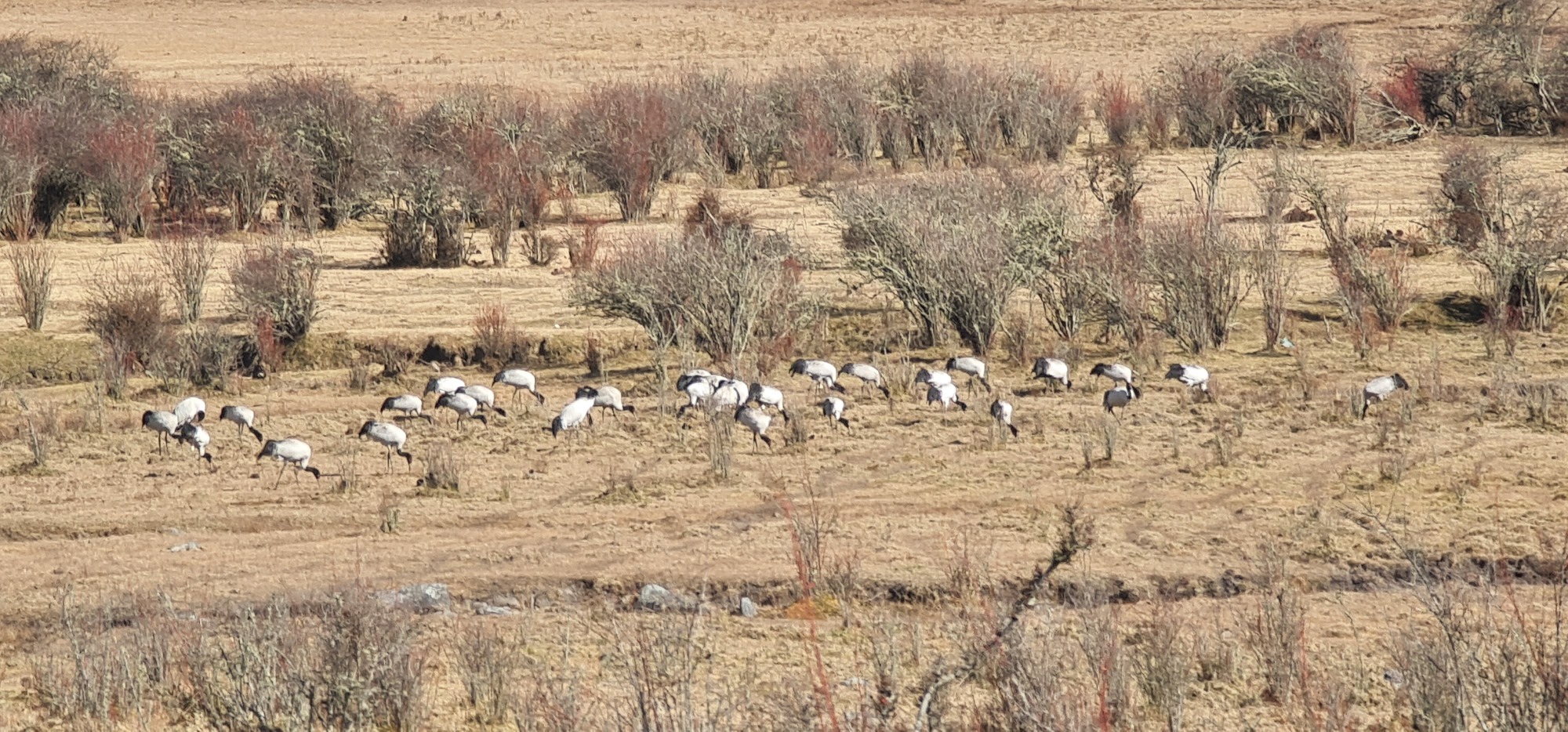
The black-necked crane is a striking high-altitude bird that breeds in the Tibetan Plateau region and winters in sheltered Himalayan valleys, including Phobjikha. Its arrival marks a seasonal change that local communities have observed for generations.
Phobjikha is a broad glacial valley of open marshes, meadows and farms. Its wintering habitat is important to the cranes, while the surrounding villages depend on the same landscape for their livelihoods. The festival brings these two realities together: protecting wildlife and supporting the people who live alongside it.
The Royal Society for Protection of Nature (RSPN) initiated the festival in 1998 as part of its community-based conservation and tourism work. Today, the celebration offers an opportunity for local residents, schoolchildren and visitors to recognise the value of the birds and their habitat.
A festival with a conservation purpose
Traditional performances and children's crane dances are joyful, but the festival carries a serious message. Protecting wintering habitat, avoiding disturbance and recognising the economic value of responsible nature tourism can help people and cranes coexist. For travellers, attending is an invitation to understand that conservation is also about communities.
What happens at the Black-Necked Crane Festival?
Expect a lively community gathering rather than a large commercial spectacle. The programme has traditionally featured cultural performances, schoolchildren dressed as cranes, dances and short dramatic presentations about the birds and their protection. Specific performances and timings for 2027 have not yet been confirmed.
The children's crane dance
One of the most memorable moments is the crane dance performed by local children. With their arms mimicking wings and their movements echoing the birds' elegant courtship displays, they turn a conservation message into something joyful and immediately understandable, especially for families travelling with children.
Local culture and community
The festival is also a chance to see people from the valley gathering together, celebrating their cultural heritage and welcoming visitors. Take time to watch the performances, speak with your local guide about conservation and appreciate the people who make the event possible.
Unlike Paro or Thimphu Tshechu, the Black-Necked Crane Festival is not centred on a sequence of sacred cham dances. Its defining story is the relationship between the valley, its people and the returning cranes. For those interested in traditional religious festivals, explore our Paro Tshechu and Thimphu Tshechu guides.
More than a festival: a Bhutanese perspective on welcoming the cranes
In Phobjikha, the return of the black-necked cranes is part of the rhythm of life in the valley. The birds arrive as the weather turns colder, and their presence connects the surrounding wetlands, farms and communities in a shared seasonal story. For travellers, understanding this relationship can make the festival much more meaningful than simply watching a performance.
It is worth taking time to listen to local explanations of why the cranes matter, how the community helps protect their winter habitat and what responsible wildlife watching looks like in practice. This is where a visit can become a deeper encounter with Bhutan's conservation values rather than a quick stop for photographs.
At Lhayul, we encourage visitors to approach the valley with curiosity and respect: enjoy the performances, learn about the community's conservation efforts and observe the birds from an appropriate distance. The most rewarding memories often come from slowing down enough to notice the landscape and the people who care for it.
The spiritual side of Phobjikha: compassion for all living beings
Although the crane festival is primarily a conservation celebration, Phobjikha also offers a meaningful setting for travellers interested in Bhutan's spiritual traditions. Gangtey Goenpa, an important Buddhist monastery overlooking the valley, is closely woven into the landscape and community.
In Buddhist thought, compassion extends beyond human beings. A thoughtful visit to Phobjikha can invite reflection on how we share the natural world with other living creatures. Watching cranes feed quietly in the wetlands, listening to the valley's stillness and visiting Gangtey Goenpa can be part of a journey that values both spiritual understanding and care for nature.
Local tradition holds that arriving cranes circle Gangtey Goenpa, a story that reflects the affection and reverence with which people regard the birds. It is best understood as a cherished local belief, not a behaviour every visitor should expect to witness.
Slow travel rather than rushing through
We recommend spending at least one night in Phobjikha if your itinerary allows. An unhurried visit gives you time for a valley walk, a monastery visit, quiet birdwatching and conversations with your guide about Bhutanese conservation and cultural life. It also reduces the temptation to crowd wildlife for a quick photograph.
Where and when can you see black-necked cranes in Bhutan?
The cranes generally arrive in Phobjikha from late October and remain through winter, often until February or March. Their exact arrival, numbers and daily movements vary with weather and environmental conditions. Seeing the festival does not guarantee a close crane sighting.
Responsible birdwatching
- Use binoculars or a zoom lens and keep a respectful distance.
- Stay on established paths and follow local guidance around sensitive wetlands and roosting sites.
- Never chase, feed, call to or use drones near cranes.
- Keep noise low and avoid disturbing birds at dawn or dusk.
- Ask your guide about suitable viewing points and any seasonal access restrictions.
Travellers interested in wildlife photography may enjoy a longer stay with early morning and late afternoon observation, subject to local conditions. Patience usually makes for a better experience than trying to get as close as possible.
How to plan your visit to Phobjikha for the 2027 festival
Festival date and location
The 2027 Black-Necked Crane Festival is tentatively listed for Thursday, 11 November 2027 at Gangtey Goenpa, Phobjikha Valley, Wangdue Phodrang. It is generally a one-day event. Check final arrangements with your tour operator closer to the date.
How to get there
Phobjikha is usually visited by road as part of a western or central Bhutan itinerary. Many travellers combine it with Thimphu, Punakha and Paro. Mountain roads and travel times can vary, so allow flexibility rather than planning a tightly timed same-day journey.
What to wear in November
November can bring bright skies and cold mornings and evenings in the valley. Bring layers, a warm jacket, comfortable walking shoes, sun protection and binoculars if you have them. Dress modestly when visiting Gangtey Goenpa.
Where to stay
Phobjikha offers a range of lodges and local accommodation. Staying overnight makes it easier to appreciate the valley in the quieter morning and evening hours. Accommodation around the festival can fill early, so advance planning is sensible.
Suggested four-day cultural and nature extension
- Day 1: Travel from Thimphu towards Punakha, stopping at Dochula Pass if weather permits.
- Day 2: Continue to Phobjikha, visit Gangtey Goenpa and enjoy a gentle valley walk.
- Day 3: Attend the Black-Necked Crane Festival on 11 November and learn about the valley's conservation work.
- Day 4: Enjoy responsible crane watching, then continue your Bhutan journey.
This is an illustrative itinerary. Adjust the travel days to align with the final festival schedule and your arrival and departure arrangements.
Bhutan travel costs and entry requirements
Your trip budget may include accommodation, transport, a guide, applicable entry requirements and Bhutan's Sustainable Development Fee. For details, see our SDF guide, visa information and Bhutan trip cost guide.
Frequently asked questions
When is the Black-Necked Crane Festival in 2027?
It is tentatively scheduled for 11 November 2027. Confirm the final date and programme before booking travel.
Where is the festival held?
At Gangtey Goenpa in Phobjikha Valley, Wangdue Phodrang, Bhutan, according to the published tentative festival calendar.
Is the Black-Necked Crane Festival a Buddhist tshechu?
No. It is primarily a community and conservation festival celebrating the cranes' return, although it takes place in a landscape with important Buddhist heritage.
Will I see cranes during the festival?
November falls within the usual wintering season, but wild birds move freely. Sightings depend on conditions and cannot be guaranteed.
Is it suitable for children?
Yes. The crane dances performed by schoolchildren and the festival's conservation message can make it particularly engaging for families.
How long should I stay in Phobjikha?
One overnight stay is worthwhile, while two nights allow a more relaxed combination of the festival, Gangtey Goenpa, nature walks and birdwatching.
Can I combine the festival with a spiritual Bhutan tour?
Yes. Phobjikha can fit naturally into a journey that includes monasteries, quiet reflection, cultural experiences and responsible nature travel.
Experience Phobjikha with Bhutan Lhayul
Discover a quieter side of Bhutan, where nature conservation, community life and spiritual traditions meet. We can help you plan a private journey around the crane festival, with time to appreciate the valley rather than rush through it.
Plan Your Bhutan Journey