Bhutan Lhayul Tours & Travels · Tailor-made experiences
Bhutan Photography Tours: Capture Landscapes, Festivals and Living Traditions
Bhutan invites you to slow down and look more closely. Morning light falls across mountain valleys, prayer flags move in the wind, monks gather at centuries-old monasteries and families celebrate festivals that remain part of everyday spiritual life. For photographers, the beauty lies not only in the scenery but also in the stories behind it.
At Bhutan Lhayul Tours & Travels, we arrange private and small-group photography tours in Bhutan shaped around your interests. Whether you love landscapes, wildlife, portraits, architecture or documentary storytelling, we build in time to observe, wait for the light and experience the places you photograph.
See a Photography Tour in Bhutan
Rather than relying only on descriptions, watch this video from a photography experience in Bhutan. It gives a sense of the people, places and shared moments that can make a photography journey memorable.
A photography journey in Bhutan, featuring travellers and cultural experiences.
Why Choose a Photography Tour in Bhutan?
Bhutan is a dream destination for photographers. Snow-capped mountains, ancient monasteries, colourful festivals and peaceful rural landscapes offer endless opportunities to create memorable images. Whether you are an experienced photographer or simply enjoy capturing special moments, Bhutan provides a unique setting unlike anywhere else in the world.
Our photography tours combine iconic sights with time and flexibility to slow down, observe and photograph Bhutan at your own pace.
- Breathtaking Himalayan landscapes
- Ancient monasteries and fortress dzongs
- Colourful festivals and traditional dances
- Authentic village life and rural scenery
- Sunrise and sunset photography opportunities
- Flexible itineraries with plenty of time for photography
- Suitable for individuals, couples and photography groups
What Makes a Bhutan Photography Tour Different?
Bhutan's valleys, forests and settlements offer extraordinary variety within a relatively compact journey. Yet a good photography holiday is not simply a sightseeing itinerary with a camera. It allows time for changes in light, thoughtful composition and encounters that cannot be rushed.
- Unhurried schedules: make space for early starts, longer stops and opportunities to revisit a location when practical.
- Cultural interpretation: understand the significance of monasteries, rituals and local customs before photographing them.
- Varied subjects: combine mountain scenery, traditional buildings, village life, wildlife and festivals.
- Personalised planning: adapt the journey to your interests, mobility, equipment and preferred level of accommodation.
- Responsible practice: respect people's privacy, religious ceremonies and wildlife habitats.
Our local guides can support travel logistics and cultural interpretation. If you require a specialist photographic instructor, workshop leader or particular technical tuition, please request this in advance so the arrangements can be discussed rather than assumed.
Photography Highlights: Best Places for Photography in Bhutan
1. Paro Valley and Tiger's Nest Monastery
Paro offers traditional farmhouses, riverside scenes, mountain slopes and one of Bhutan's most recognisable landmarks, Taktsang or Tiger's Nest Monastery. The hike provides changing views of the monastery clinging to a cliff. Weather and cloud can dramatically alter the mood of the scene. Photography rules inside sacred buildings must be respected; exterior viewpoints are often the main photographic opportunity.
2. Punakha Dzong and the riverside landscape
At the meeting of the Pho Chhu and Mo Chhu rivers, Punakha Dzong combines striking architecture with a dramatic natural setting. Photograph the structure from different viewpoints, explore seasonal changes in the valley and look for details of traditional buildings and bridges. Morning and afternoon light can create very different compositions.
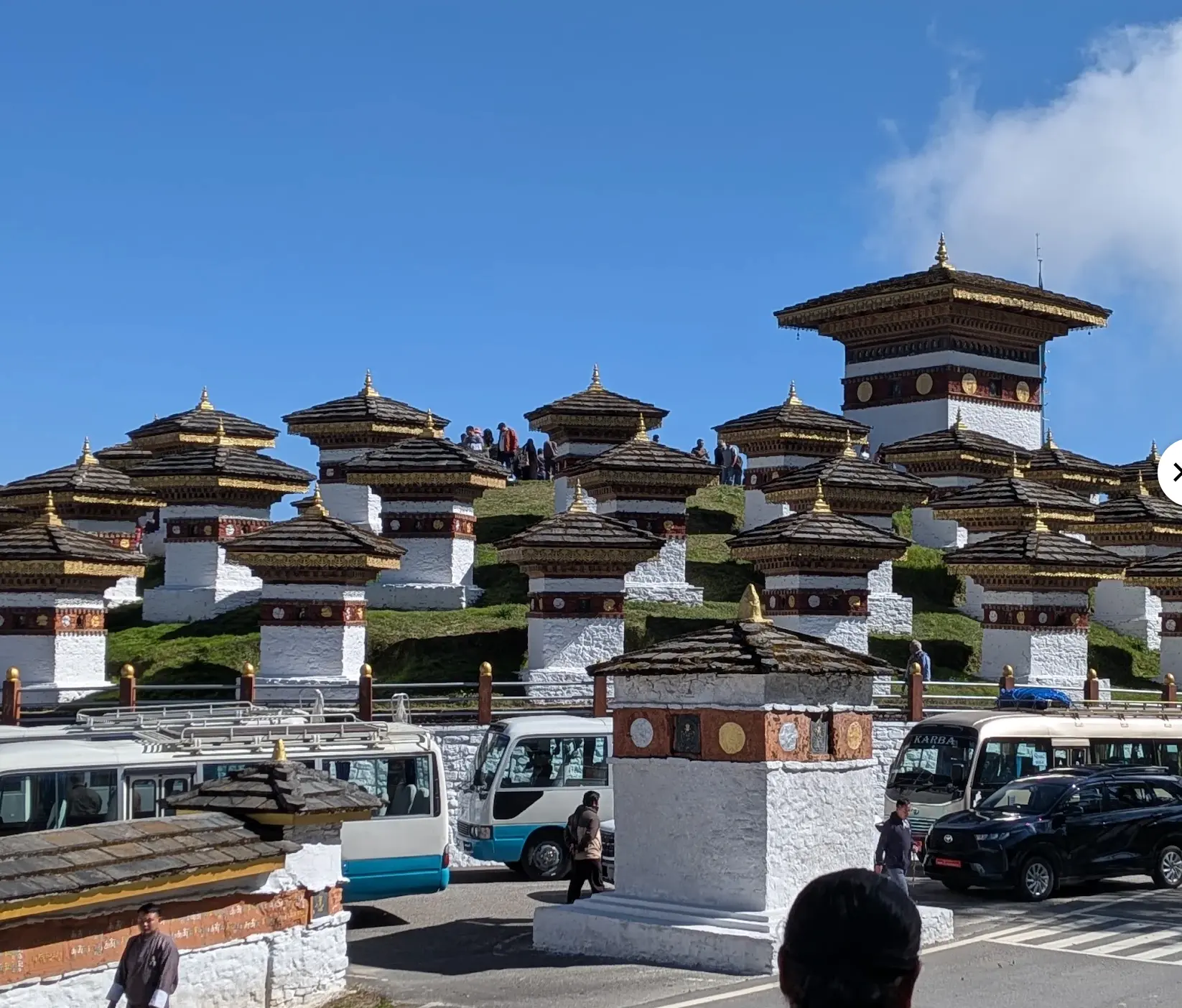
3. Dochula Pass and the 108 chortens
The Druk Wangyal Chortens at Dochula provide a strong architectural foreground. On clear days, distant Himalayan peaks may be visible. Mist, clouds and changing weather can be equally compelling, so do not judge the location solely by whether the mountains are visible.
4. Thimphu: architecture and everyday life
Bhutan's capital offers markets, traditional buildings, contemporary streetscapes and religious landmarks. The most meaningful photographs may be quiet details: a craftsman's hands, a courtyard or the changing light on a monastery wall. For close portraits, ask permission and be sensitive to the context.
5. Phobjikha Valley and black-necked cranes
Phobjikha's broad glacial valley is a beautiful setting for atmospheric landscape photography. During the wintering season, it also attracts black-necked cranes. Wildlife viewing requires patience, distance and suitable optics. Avoid approaching or disturbing birds for a closer photograph. The Black-Necked Crane Festival offers an additional cultural and conservation perspective, subject to the festival schedule.
6. Paro and Thimphu Tshechus
Bhutanese tshechus feature ceremonial mask dances, elaborate textiles, music and community gatherings. These are religious events, not performances staged for photographers. A guide can help explain the symbolism of the dances and where photography is appropriate. Explore our guides to Paro Tshechu and Thimphu Tshechu when planning festival travel.
When Is the Best Time for Photography in Bhutan?
The ideal season depends on what you want to photograph. There is no single best month for every subject.
Spring: March to May
Look for flowering landscapes, changing mountain light and opportunities to photograph spring festivals. Conditions vary with elevation and weather.
Autumn: September to November
Often popular for mountain scenery, clearer post-monsoon conditions and major cultural festivals. Popular dates may require early planning.
Winter: December to February
Consider crisp air, quiet valleys and black-necked crane photography in Phobjikha. Early mornings can be very cold.
Summer: June to August
Green hills, cloud, mist and dramatic weather offer atmospheric subjects, but rain can affect visibility, travel and equipment handling.
For wider seasonal planning, read our best time to visit Bhutan guide. If you have a particular festival, wildlife species or landscape in mind, tell us before selecting dates.
Beyond the Photograph: Bhutan's Spiritual and Cultural Landscape
In Bhutan, a monastery is not simply a beautiful building and a mask dance is not simply a colourful spectacle. These places and events are part of a living Buddhist tradition. Understanding that context changes the way we approach photography.
A thoughtful photography journey can leave room to put the camera down. Listen to a guide explain a ritual, notice the quiet rhythm of a monastery courtyard or spend time observing the landscape without immediately searching for an image. Photography can become a way of paying attention rather than collecting sights.
For travellers drawn to meditation, Buddhist heritage and contemplative experiences, we can discuss combining photography with a Bhutan spiritual tour. Visits and activities depend on local arrangements, religious schedules and the wishes of host communities.
Photographing people and sacred places respectfully
- Ask permission before taking close-up photographs of people, particularly children.
- Never assume photography or filming is permitted inside temples, monasteries or during ceremonies.
- Do not interrupt prayers, block processions or ask religious participants to repeat an action for a photograph.
- Avoid flash where it may disturb people or religious activities.
- Respect restrictions on drones and obtain any necessary permissions in advance.
- Give wildlife space and follow local conservation guidance.
Sample 8-Day Bhutan Photography Itinerary
This is an illustrative private itinerary, not a fixed departure. We adjust locations and time allocations to your travel dates, interests and conditions on the ground.
- Day 1: Arrive in Paro. Meet your guide, settle in and photograph the valley if time and light permit.
- Day 2: Paro Valley. Explore traditional architecture, countryside and selected cultural sites, allowing time for photography stops.
- Day 3: Tiger's Nest. Walk to Taktsang with breaks for viewpoints and landscape photography. Adjust the pace to your fitness and conditions.
- Day 4: Thimphu. Explore the capital's architecture, crafts and daily life, observing cultural etiquette.
- Day 5: Dochula and Punakha. Photograph the chortens and, weather permitting, mountain views before continuing into Punakha Valley.
- Day 6: Punakha. Explore the dzong, river landscapes and nearby rural scenes at a relaxed pace.
- Day 7: Return to Paro. Build in scenic stops and an opportunity to revisit a favourite subject if the route and schedule allow.
- Day 8: Departure. Transfer to Paro International Airport.
For winter wildlife photography, a longer itinerary could include Phobjikha Valley. Festival photography itineraries should instead be built around verified festival dates. Travel times, weather and road conditions will influence the final schedule.
What to Bring on a Photography Tour
You do not need professional equipment to enjoy Bhutan. A phone or compact camera can capture wonderful travel memories. Enthusiasts may appreciate a wide-angle lens for landscapes, a mid-range zoom for general travel and a longer lens for distant wildlife or festival subjects where permitted.
- Extra batteries and memory cards, especially for cold mornings and long days
- Weather protection for cameras and a lightweight rain cover
- Comfortable walking shoes and layered clothing
- A lightweight tripod where allowed and practical
- A lens cloth, dust protection and a secure camera bag
Always check airline and local restrictions for drones and specialist equipment before travelling. We cannot guarantee permission for aerial photography or restricted locations.
Planning Your Bhutan Photography Holiday
The cost of a photography tour depends on the itinerary, group size, travel season, accommodation and whether specialist photography tuition is requested. For general travel budgeting, see our Bhutan trip cost guide, Sustainable Development Fee guide and Bhutan visa information.
When you contact us, it helps to share your preferred dates, number of travellers, photographic interests, fitness or mobility considerations and whether you would like a dedicated photography leader. That allows us to propose a realistic, enjoyable itinerary rather than a rushed list of destinations.
Tailor-Made Photography Holidays
Every photographer has different interests. Whether you are passionate about landscapes, architecture, culture, festivals or everyday life, we can create a personalised itinerary to suit your style and pace.
Our itineraries are suitable for individuals, couples, friends and photography clubs. Tell us whether you prefer sunrise and sunset photography, cultural encounters, wildlife, gentle sightseeing or a more demanding schedule.
More Than Just Photography
Photography in Bhutan is about more than taking pictures. It is about connecting with the country’s culture, meeting local people and experiencing moments that stay with you long after the journey ends.
Whether you are travelling alone, with friends or as part of a photography club, our photography tours offer a unique way to discover the Kingdom of Bhutan.
Frequently Asked Questions About Bhutan Photography Tours
Is Bhutan good for landscape photography?
Yes. Bhutan offers mountain valleys, forested hills, rivers, chortens and traditional architecture. Conditions and visibility vary by season, elevation and weather.
Can beginners join a photography tour?
Yes. We can tailor the pace and itinerary to enthusiastic beginners as well as experienced photographers. Specialist technical instruction is not automatically included and should be requested separately.
What is the best month for photography in Bhutan?
Spring and autumn are often attractive for scenery and festivals, while winter is particularly relevant to black-necked crane photography. The best month depends on your preferred subjects.
Can I photograph inside Bhutanese monasteries?
Photography may be restricted or prohibited inside religious buildings and during ceremonies. Follow posted rules and guidance from local custodians and your guide.
Can I photograph Bhutan's festivals?
Photography may be possible in public viewing areas, but restrictions can apply. Do not disrupt rituals, block participants or assume that all ceremonies can be filmed.
Do you organise private photography tours?
Yes. Lhayul can plan a personalised photography-focused journey for individuals, couples and groups, subject to arrangements and availability.
Can photography be combined with a spiritual journey?
Yes. We can discuss an itinerary that includes sacred sites, cultural interpretation and opportunities for quiet reflection alongside landscape and documentary photography.
Can I bring a drone to Bhutan?
Drone use is regulated and may require prior authorisation. Do not assume that bringing a drone means you may fly it. Check current requirements before travel.
Plan a Photography Journey That Feels Personal
Tell us what you love photographing, how you like to travel and what you hope to experience in Bhutan. We would be happy to help shape a private journey around your interests, with time to see beyond the viewfinder.
Enquire About a Photography Tour