Lhayul Insights · Culture & Spirituality
Butter Lamp Offering in Bhutan: A Meaningful Spiritual Experience for Travellers
Beyond Bhutan's spectacular monasteries and Himalayan landscapes lies a quieter tradition that offers visitors a glimpse into the country's spiritual life. Discover the meaning of butter lamp offerings and how you can respectfully experience this Buddhist practice during your journey through Bhutan.
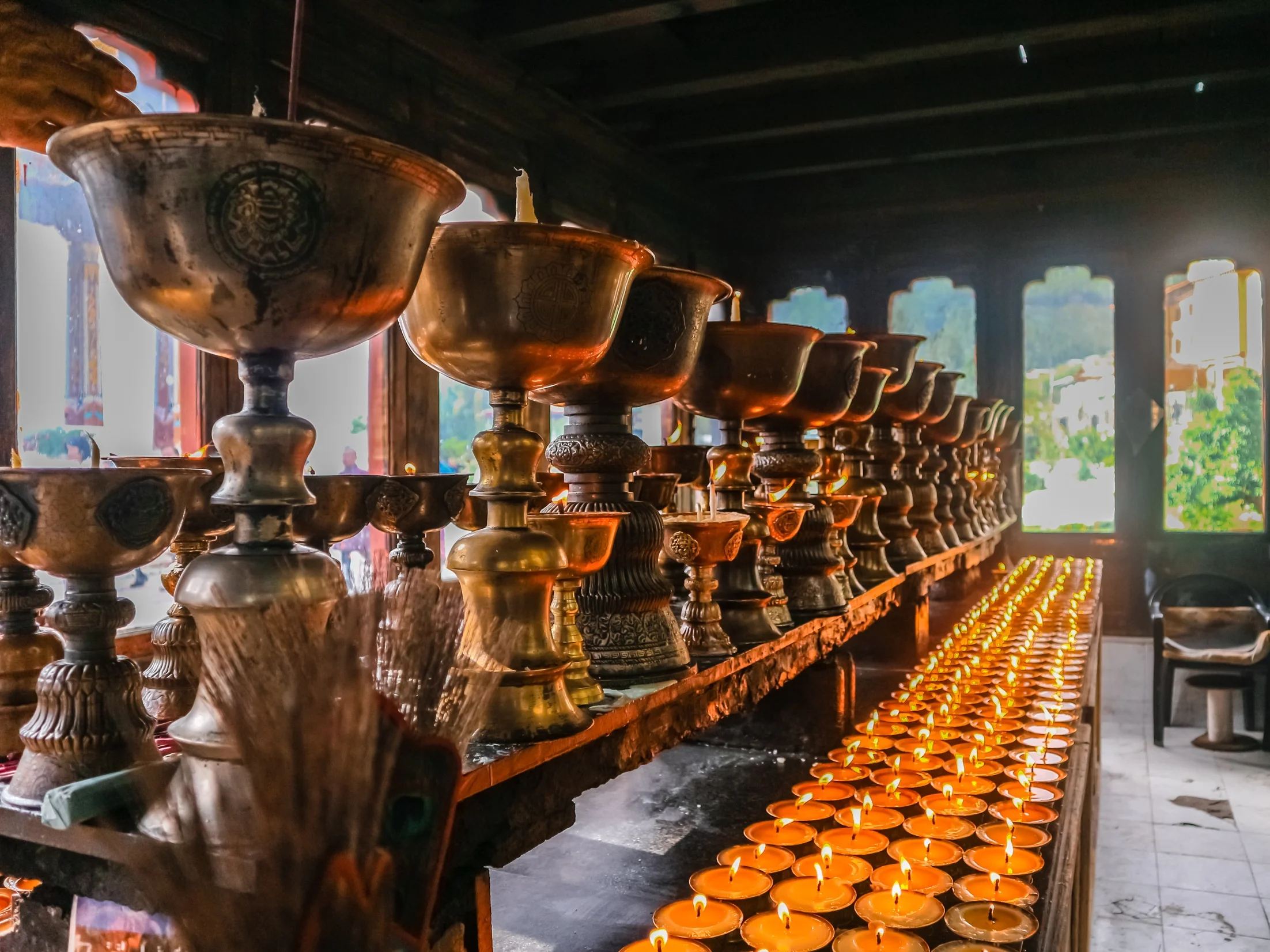
A Small Flame, a Meaningful Tradition
Imagine entering a quiet Bhutanese temple, where rows of small golden flames illuminate the prayer hall. The scent of incense lingers in the air, and somewhere in the distance, monks chant prayers.
You pause before a row of butter lamps and take a moment to reflect. Perhaps you offer a prayer for your family, remember someone who has passed away or simply wish for peace and happiness for others.
This is the tradition of butter lamp offering in Bhutan, a simple yet deeply meaningful Buddhist practice that has been part of Bhutanese spiritual life for generations.
For travellers, it offers an opportunity to experience Bhutan beyond its famous monuments and landscapes and to understand a little more about the beliefs that shape everyday life in the kingdom.
What Is a Butter Lamp Offering?
A butter lamp offering is a traditional Buddhist practice in which a small lamp is lit as an offering of light.
In Bhutan, these lamps are found in monasteries, temples and household shrines. Traditionally, they were fuelled with clarified butter, including yak butter. Today, many places also use vegetable oil or other suitable fuels.
The lamps are usually placed in small metal bowls with wicks. Their gentle flames illuminate sacred spaces where people pray, make offerings and reflect.
In Bhutanese Buddhism, offering light is an act of devotion and generosity. It symbolises the aspiration to develop wisdom, overcome ignorance and bring benefit to living beings. The intention behind the offering is regarded as especially important.
The Spiritual Significance of Offering Butter Lamps
1. Light symbolises wisdom
In Buddhist teachings, darkness can represent ignorance, while light represents wisdom and understanding. Lighting a butter lamp expresses the wish to dispel ignorance and cultivate clarity, compassion and awareness.
2. An expression of compassion and good wishes
Butter lamps are offered with prayers for the happiness and well-being of others. Families may light lamps for loved ones who are ill, facing difficulties or beginning an important new chapter. They are also offered in memory of those who have passed away. The merit of the offering may be dedicated to all sentient beings.
3. A reminder of impermanence
A lamp burns for a limited time. Its flame flickers, changes and eventually goes out. For those reflecting on Buddhist teachings, this may be a reminder of impermanence and the importance of appreciating the present moment.
4. Cultivating generosity and mindfulness
An offering need not be elaborate or expensive to be meaningful. In Buddhist practice, the sincerity of one's motivation matters. Lighting a lamp with a compassionate intention can become a brief moment of mindful reflection.
Why Do Bhutanese People Offer Butter Lamps?
For many Bhutanese families, butter lamp offerings are part of ordinary religious life, not something reserved for special ceremonies.
People may visit a monastery or temple to offer lamps on auspicious days in the Bhutanese lunar calendar, during festivals or at significant moments in their lives. Some offer lamps when a loved one is unwell, to remember a deceased relative or to express gratitude. Others make offerings as part of their regular Buddhist practice.
For visitors, seeing how naturally this practice fits into everyday life can provide a deeper appreciation of Bhutanese culture.
Can Tourists Participate in a Butter Lamp Offering in Bhutan?
Yes. Visitors can participate at temples and monasteries where butter lamp offerings are permitted. You do not need to be Buddhist to take part respectfully.
A local guide can explain the meaning of the offering, help with appropriate etiquette and identify a suitable temple. At some locations, visitors may light a lamp themselves. Elsewhere, a caretaker or monk may prepare or light the lamp on their behalf.
Good to know: Butter lamp offerings are living religious practices, not staged tourist performances. Participation, timing, photography and any contributions depend on the temple and its custodians.
What Happens During a Butter Lamp Offering Experience?
Step 1: Visit a temple or monastery
Your guide accompanies you to a temple where offerings are permitted. You dress modestly, remove your shoes where required and follow local customs.
Step 2: Understand the meaning
Before the offering, your guide explains the symbolism of light and the importance of making an offering with a positive intention. You might reflect on someone you care about or wish for the well-being of others.
Step 3: Offer a butter lamp
Where permitted, you light a prepared lamp carefully. In other places, the temple caretaker lights it while you make the offering and observe.
Step 4: Spend a moment in prayer or silence
You may say a prayer, reflect quietly or simply observe the flame. Visitors who do not follow Buddhism can use the moment to consider gratitude, compassion and goodwill.
Step 5: Dedicate the offering
In Buddhist tradition, the merit arising from an offering is often dedicated to the benefit of all sentient beings. A guide may explain this practice, without expecting visitors to recite unfamiliar prayers.
Where Can You Experience Butter Lamp Offerings in Bhutan?
Butter lamp offerings are part of religious life in many parts of Bhutan. Suitable locations depend on temple access and local arrangements.
Thimphu
Bhutan's capital offers opportunities to visit active Buddhist temples and understand the role of religious practices in daily life. Your guide can help find a suitable place for an offering.
Paro
Paro is home to important religious sites, including Tiger's Nest Monastery. A butter lamp offering, where permitted, can complement a wider cultural or spiritual visit to the valley.
Punakha
Known for its historic dzongs and beautiful river valleys, Punakha offers visitors opportunities to explore Bhutan's religious heritage and learn about prayer and offerings.
Bumthang
Often described as Bhutan's spiritual heartland, Bumthang has some of the country's oldest sacred temples. Its rich Buddhist history makes it especially rewarding for travellers interested in spiritual traditions.
Is There a Special Prayer for Butter Lamp Offerings?
Yes. Prayers may accompany the offering of light. One tradition associated with light offerings is the butter lamp aspiration prayer, often known as Marmé Mönlam in Tibetan Buddhist practice.
Such prayers express aspirations for wisdom, the removal of ignorance and the well-being of sentient beings. Visitors need not memorise a prayer or perform an elaborate ritual. A quiet moment of sincere goodwill is an appropriate way to approach the experience.
Etiquette for Visitors: What Should You Know?
- Dress modestly. Cover your shoulders and knees, and remove shoes where required.
- Follow your guide's instructions. Temple practices and restrictions vary.
- Ask before taking photographs. Photography may be restricted inside temples.
- Respect worshippers. Avoid interrupting prayers or ceremonies.
- Be careful around flames. Lamps and metal containers may be hot.
- Offer respectfully. Ask your guide about any appropriate contribution.
Most importantly, allow yourself to experience the moment without feeling the need to photograph every part of it.
Why Include a Butter Lamp Offering in Your Bhutan Itinerary?
Bhutan is often associated with mountain scenery, traditional architecture and magnificent monasteries. Yet some of the most memorable travel experiences happen in quieter moments.
A butter lamp offering offers a glimpse into a tradition that remains meaningful to local families and religious communities. It is accessible to travellers of different ages and does not require strenuous activity or specialised knowledge.
For those looking for unique things to do in Bhutan, especially meaningful cultural or spiritual experiences, a respectfully arranged butter lamp offering can be a thoughtful addition to a wider journey.
Frequently Asked Questions
Do I need to be Buddhist to offer a butter lamp?
No. Non-Buddhist visitors may participate respectfully where the temple permits it.
How much does a butter lamp offering cost in Bhutan?
There is no single fixed price. Some temples accept voluntary offerings, while special arrangements may involve additional contributions. Ask your guide about the local practice.
Can I offer a butter lamp for someone who has passed away?
Yes. Butter lamps are commonly offered in memory of deceased loved ones, often with prayers and dedication of merit.
Can children participate?
Children may participate where permitted, with close supervision around open flames.
Can a butter lamp offering be included in my Bhutan tour package?
Yes. Your tour operator can explore suitable temple arrangements, subject to local permission and availability.
Is photography allowed during the offering?
It depends on the temple. Always ask permission before taking photographs, especially indoors.
Experience Bhutan Beyond Sightseeing
A journey through Bhutan offers far more than beautiful scenery and historic monuments. It also offers glimpses into a culture where Buddhist traditions remain an important part of everyday life.
The act of offering a butter lamp may take only a few minutes, but the meaning behind it invites reflection on wisdom, compassion and gratitude.
For travellers seeking something personal and meaningful, it can become a memorable part of their visit to Bhutan.